The people behind the languages
Inventors, decipherers, revivers — and last speakers
A king who made an alphabet for his people, a silversmith who could not read who made a script for his, a man who turned an ancient language back into a mother tongue… Sometimes a language’s fate rests on one person.
Chapter 1
A king’s twenty-eight letters
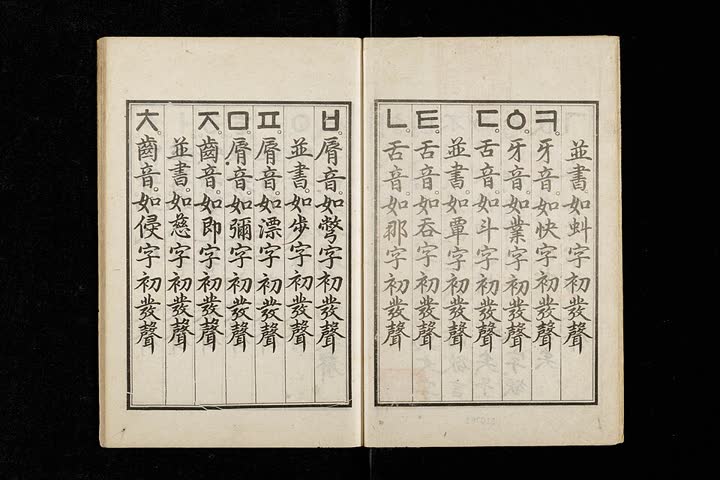
In fifteenth-century Korea, writing meant Classical Chinese, and only a small elite could read and write. In 1443 King Sejong of Joseon and his scholars created a new alphabet, promulgated in 1446 as the Hunminjeongeum, “the correct sounds for the instruction of the people”. His preface explains why: the sounds of the language differ from Chinese, so many ordinary people had things to say but no way to write them; “feeling compassion, I have newly made twenty-eight letters, which I wish everyone to learn easily for daily use.” The consonants sketch the organs of speech: ㄱ the tongue root blocking the throat, ㄴ the tongue against the roof of the mouth, ㅁ the shape of the mouth. Today the alphabet is called Hangul (Chosŏn’gŭl in the North).
Chapter 2
The man who could not read
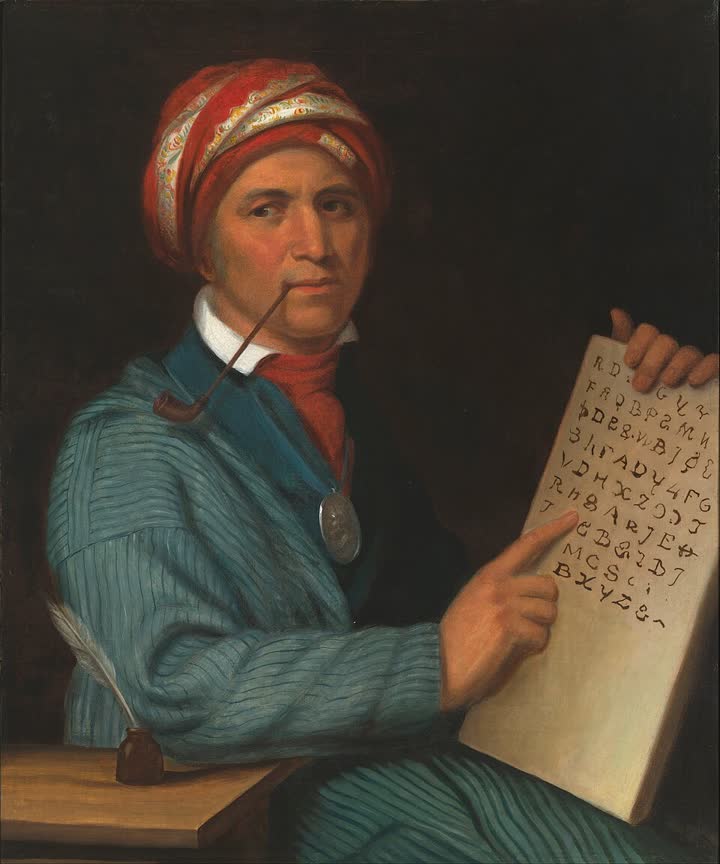
Sequoyah was a Cherokee silversmith who could not read or write any language. Seeing settlers put speech on paper, he was convinced his people could do the same. After some twelve years of trying, in 1821 he completed a syllabary: one symbol for each syllable, 86 in all (85 are used today). Some look like English letters but sound nothing like them: Ꭱ, like an R, is e; Ꮋ, like an H, is mi; Ꮪ, like an S, is du. A Cherokee speaker could learn it in weeks, and it spread quickly; in 1828 the first Cherokee newspaper, the Cherokee Phoenix, began printing. A person who could not read inventing a writing system on his own is almost without parallel in history.
Chapter 3
Fourteen centuries of silence
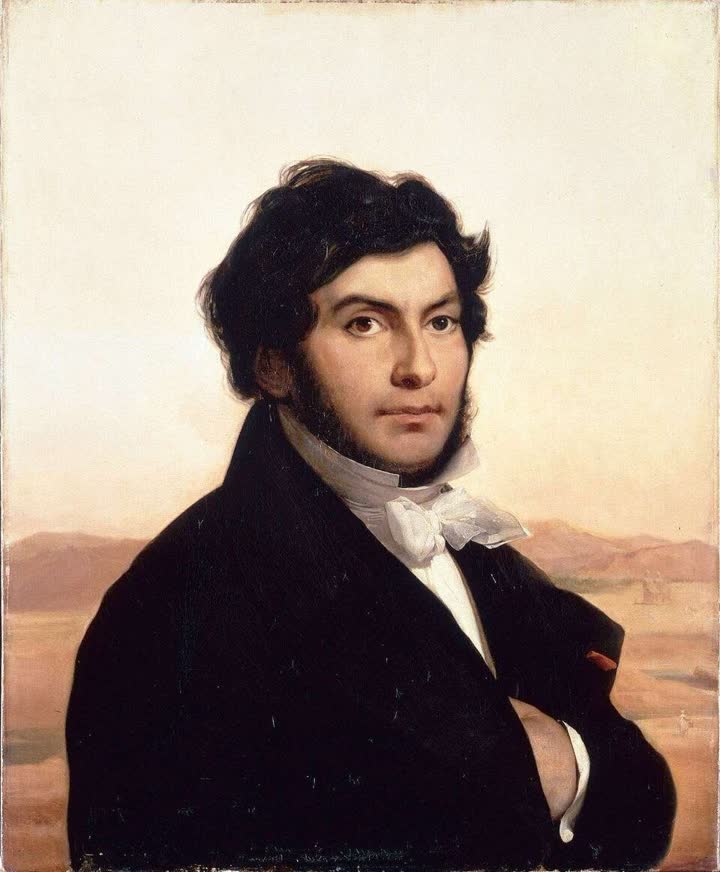
The last known hieroglyphic inscription was carved in AD 394; after that, the knowledge of how to read it faded away. In 1799 French soldiers in Egypt found a stone at Rosetta bearing one decree in three scripts: hieroglyphs, Demotic and Greek. The key lay with a young French scholar, Jean-François Champollion, who had studied Coptic — the last stage of the Egyptian language, still used in the liturgy of the Coptic Church — since his teens. In a royal cartouche from a temple he recognised the sun sign as ra (Coptic “sun” is rē) and the next sign as ms (Coptic “to give birth” is mise): the name was Ramesses. He announced the decipherment in 1822. The story goes that he ran into his brother’s office, cried “I’ve got it!” and fainted.
Chapter 4
A mother tongue again
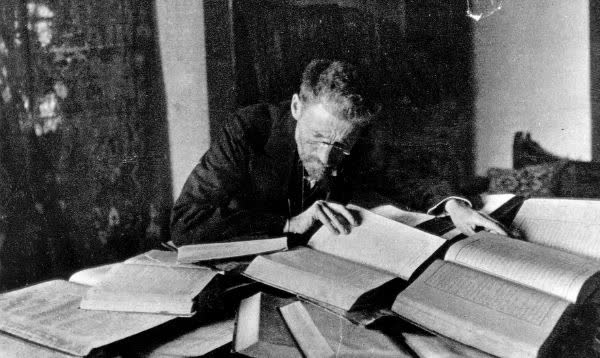
Somewhere between the 2nd and 4th centuries AD Hebrew stopped being anyone’s mother tongue, though it lived on for well over a thousand years in prayer and in writing. In 1881 Eliezer Ben-Yehuda moved to Jerusalem and resolved to speak only Hebrew at home; his son became the first child in modern times to grow up with Hebrew as his first language. To let an ancient language talk about modern life he compiled a vast dictionary and coined words such as milon (dictionary) and iton (newspaper); the dictionary was completed only in 1959, decades after his death. He did not do it alone — schools and new communities mattered as much — but he became the face of what is often called the most successful language revival in history. Today Hebrew has millions of native speakers.
Chapter 5
Doctor Hopeful
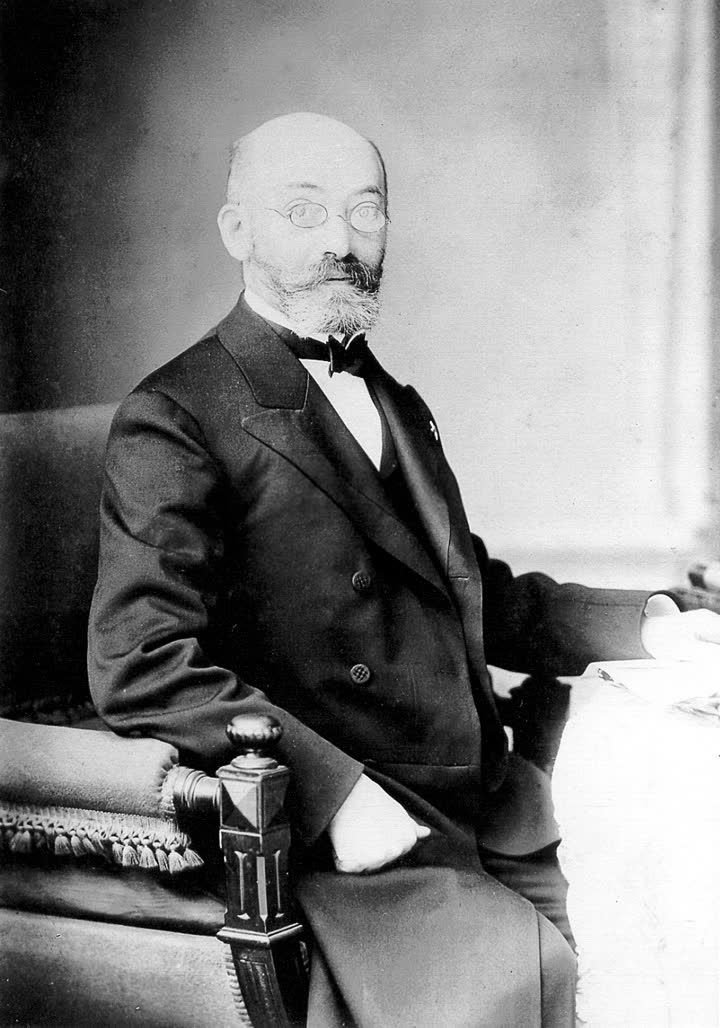
Zamenhof grew up in Białystok, then in the Russian Empire, a town where Poles, Russians, Germans and Jews each kept to their own language and eyed one another with suspicion. He believed a neutral language belonging to everyone could ease such divides. In 1887 he published a small book presenting his international language under the pen name Doktoro Esperanto — “Doctor One-who-hopes” — and the name stuck to the language. Its grammar fits in sixteen rules, with no irregular verbs. It never became humanity’s second language, but for well over a century people have spoken and written it, and about a thousand have even grown up with it as a mother tongue.
Chapter 6
Another king, another script
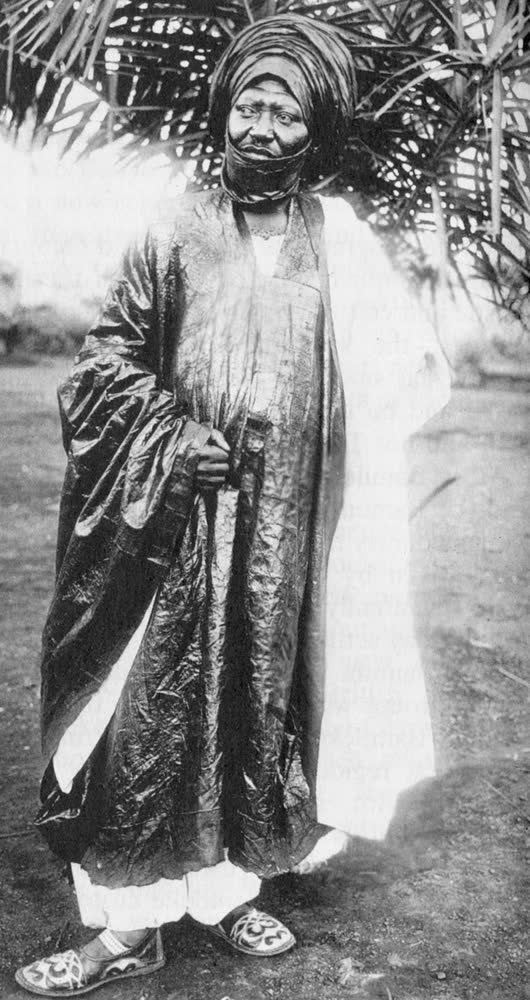
At the end of the nineteenth century, in the Bamum kingdom of what is now western Cameroon, the young King Ibrahim Njoya set out to design a script for his language. The first version had hundreds of picture-like signs; revised again and again, by around 1910 it had become a syllabary of some 80 signs. He used it to record the kingdom’s history, customs and medicine, and opened schools in his capital, Foumban, to teach it. Cameroon was then under colonial rule, first German, later French. In 1931 the French authorities deposed him and exiled him to Yaoundé, where he died two years later, and the script fell out of use. Today the manuscripts kept at the palace are being catalogued, and in 2009 the Bamum script was added to Unicode.
Chapter 7
The last of the Yahi
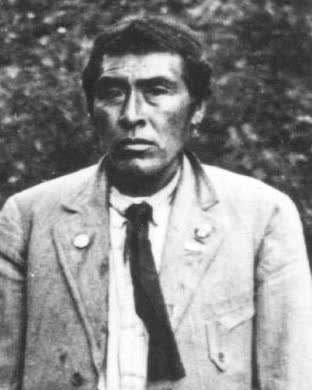
After the California Gold Rush, settlers and militias all but wiped out the Yahi; the few survivors hid in the hills for some forty years. In August 1911 the last of them, starving, walked out of the forest and was found at a slaughterhouse near Oroville. He spent the rest of his life at an anthropology museum in San Francisco, recording the words, stories and songs of Yahi — a dialect of Yana — with the anthropologist Alfred Kroeber and the linguist Edward Sapir. Following Yahi custom he never spoke his own name, so he was called Ishi: “man” in his language. He died of tuberculosis in 1916.
Chapter 8
The code that was never broken
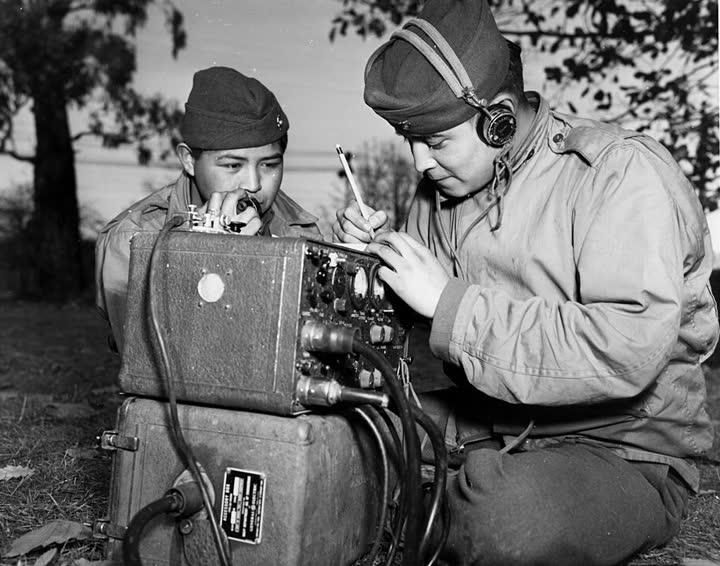
In the Second World War the US Marine Corps recruited some four hundred Navajo men to send messages in their language across the Pacific. Navajo was then barely written down and was built utterly unlike English or Japanese — and on top of it they devised a code: a tank was a “tortoise”, a submarine an “iron fish”, a fighter plane a “hummingbird”. It was never broken. In the first two days at Iwo Jima six Navajo code talkers sent and received more than eight hundred messages without a single error. Many of them had been punished as children, at boarding school, for speaking Navajo. Their story stayed classified until 1968.
| Navajo | |
|---|---|
| tank (“tortoise”) | chay-da-gahi |
| submarine (“iron fish”) | besh-lo |
| fighter plane (“hummingbird”) | da-he-tih-hi |
Code words as spelled in the declassified Navajo Code Talkers’ Dictionary.
Chapter 9
The last speaker
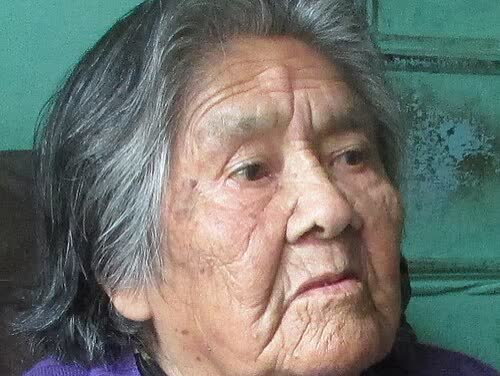
Cristina Calderón lived on Navarino Island at the southern tip of Chile and was the last native speaker of Yaghan, the language of the canoe people who for generations travelled the channels of Tierra del Fuego. In her last years she worked with her granddaughter on a vocabulary and a book of stories, setting down everything she remembered. She died in February 2022, aged 93. Every language that falls silent has a last speaker like her — and most of the time, no one writes down their name.
Chapter 10
The last, and the first
The last native speaker of Manx, Ned Maddrell, died in 1974. Before he did, recordings were made of him and the island’s other elders, and with those recordings and old books a band of learners carried the language on. In 2001 the Isle of Man opened a primary school taught entirely in Manx, and there are now children growing up speaking it: a new first generation. (This atlas follows Glottolog, which still lists Manx as extinct in the traditional sense of a mother tongue passed down; UNESCO reclassified it as critically endangered in 2009.)